You Have Your Insurance Card… But What Do All the Numbers Mean?
You receive your insurance card.
It looks simple at first.
However, it includes multiple numbers, codes, and labels.
As a result, many people feel confused.
👉 “What is the member ID?”
👉 “What does group number mean?”
👉 “Where is my copay listed?”
If you’ve asked these questions, you’re not alone.
What Is a Blue Cross Blue Shield Insurance Card?
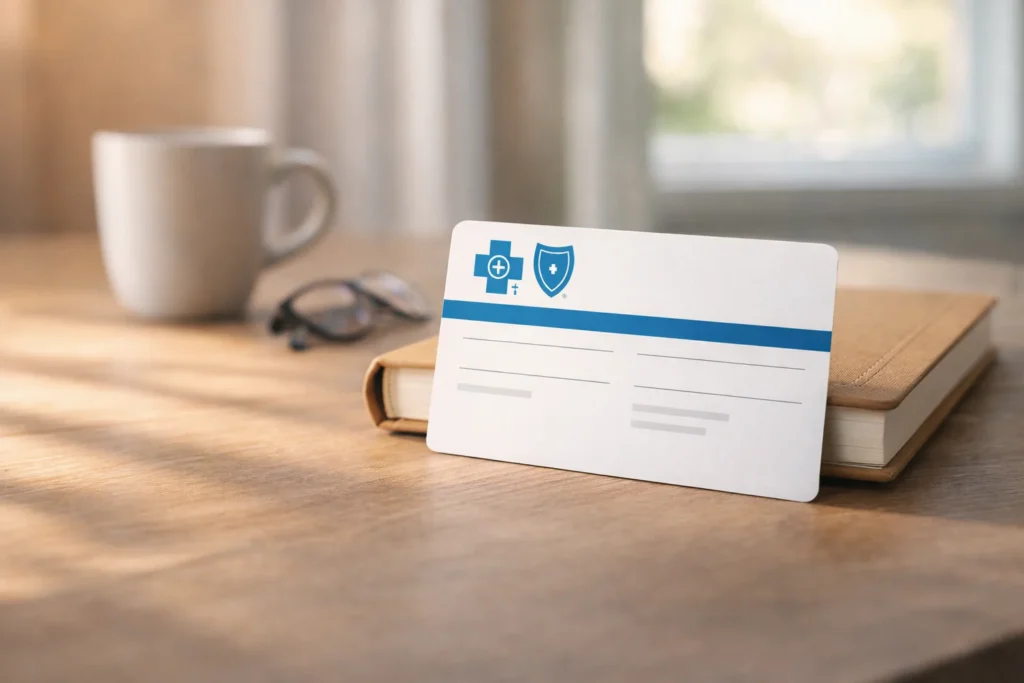
A Blue Cross Blue Shield (BCBS) insurance card is your proof of coverage.
It contains:
- Your identification details
- Your plan information
- Your benefits summary
👉 Therefore, you must understand it before visiting a provider.
Why It’s Important to Read Your Insurance Card
At first, you may ignore the details.
However, understanding your card helps you:
- Avoid billing errors
- Know your costs
- Verify coverage
- Provide correct information at check-in
As a result, your healthcare experience becomes smoother.
Key Parts of a BCBS Insurance Card
Let’s break it down step by step.
✔ 1. Member ID Number
This is your unique identifier.
- Providers use it to verify your insurance
- It links directly to your coverage
Therefore, always provide this correctly.
✔ 2. Group Number
The group number identifies your employer or plan.
- Used for billing and claims processing
- Important for employer-based plans
As a result, it helps insurers process claims accurately.
✔ 3. Plan Type
Your card may show plan types such as:
- HMO
- PPO
- EPO
Each plan affects how you access care and referrals.
✔ 4. Copay Information
This shows how much you pay for visits.
For example:
- Office visit copay
- Specialist copay
- Emergency room cost
Therefore, you can estimate your out-of-pocket expenses.
✔ 5. Provider Network Information
Some cards list:
- Network name
- Coverage area
As a result, you know which providers are in-network.
✔ 6. Customer Service Contact
Your card includes:
- Phone numbers
- Support information
You can call for eligibility, claims, or benefits questions.
Where to Find Each Detail on the Card
Although designs vary, most BCBS cards follow a similar layout.
Typically:
- Member ID → front center
- Group number → near member ID
- Copays → front or side
- Contact info → back of card
Therefore, reviewing both sides is important.
Common Mistakes People Make
Many patients misunderstand their cards.
For example:
- Confusing member ID with group number
- Ignoring copay details
- Using outdated cards
- Not checking network information
As a result, billing errors and claim denials can occur.
How This Helps Healthcare Providers
When patients provide accurate details:
- Claims are processed faster
- Errors decrease
- Payments are not delayed
Therefore, understanding your card benefits both patients and providers.
Tips to Use Your Insurance Card Correctly
To avoid issues:
- Always carry your latest card
- Double-check your member ID
- Confirm coverage before visits
- Ask questions if unsure
Small steps can prevent big billing problems.
Final Thoughts: Understanding Your Card Saves Time and Money
Your insurance card is more than just an ID.
It is a key to your healthcare access.
When you understand it, you can:
- Avoid confusion
- Reduce billing errors
- Improve your healthcare experience
- In the end, clarity leads to better decisions.
Need Help Verifying Insurance and Reducing Billing Errors?
If your practice struggles with:
- Incorrect insurance details
- Eligibility verification issues
- Claim rejections due to errors
- Delayed payments
It may be time to improve your front-end billing process.
Here’s how we can help:
- ✔ Accurate insurance verification
- ✔ Reduced claim denials
- ✔ Faster claim processing
- ✔ Improved revenue cycle performance
👉 Get a verification workflow audit and identify gaps in your process.
Let’s make your billing accurate from the first step.